


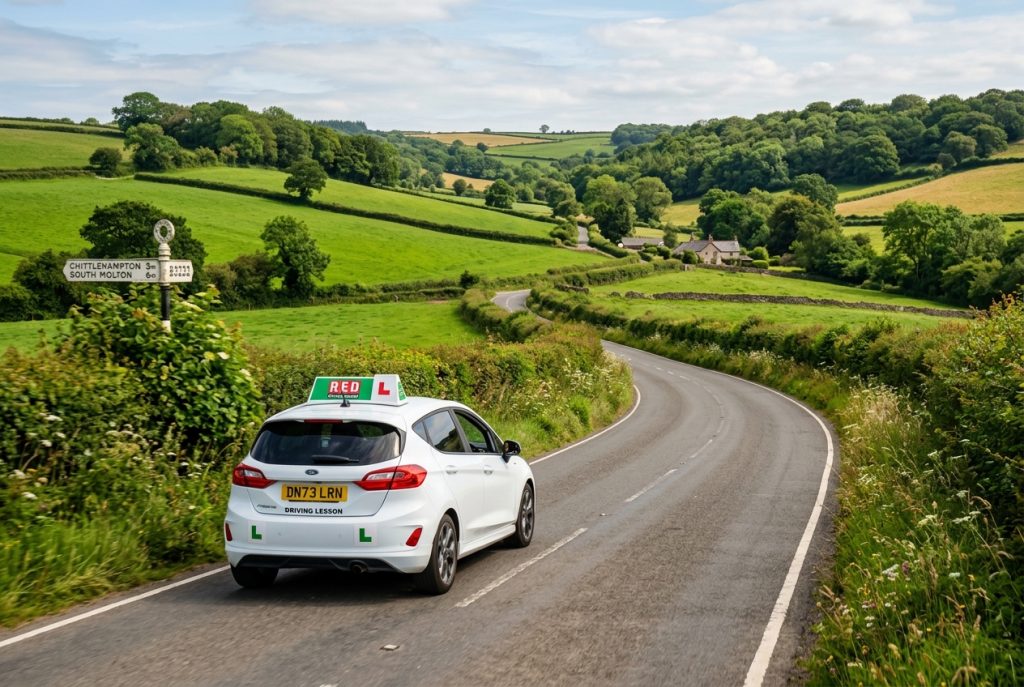
The UK government made a landmark commitment to road safety at the start of 2026 — and its ambitions could reshape the way we learn to drive for a generation. The Road Safety Strategy 2026, published in January, sets out the most sweeping overhaul of road safety policy in decades. With five major consultations having closed on 11 May 2026, the industry is now waiting to see which proposals become law.
Here’s what’s in it, why it matters, and what it could mean for you — whether you’re working towards your driving test or running a driving school.
What Is the UK Road Safety Strategy 2026?
Published by the Department for Transport in January 2026, the Road Safety Strategy sets an ambitious national target: a 65% reduction in road deaths and serious injuries by 2035, using 2022–2024 data as the baseline. That’s a significant stretch target given that around 1,700 people die on UK roads each year and tens of thousands are seriously injured.
The strategy acknowledges that the UK’s road safety record, while historically strong by international standards, has plateaued in recent years. New and young drivers remain disproportionately at risk. The government is pushing for systemic change — not just tweaks at the margins.
The Key Proposals at a Glance
The strategy contains a range of proposals, several of which will directly affect learner drivers and the driving instruction industry:
- Minimum learning period: A consultation explored introducing either a 3-month or 6-month mandatory minimum learning period before a learner driver can take their practical test. The aim is to ensure new drivers gain experience in varied conditions — night driving, adverse weather, motorways and busy urban roads.
- Mandatory eyesight testing for over-70s: Drivers aged 70 and over would be required to take a formal eyesight test at licence renewal — a significant change from the current self-declaration system.
- Further regulation of vehicle design: The strategy looks at how vehicle safety technology (such as intelligent speed assistance and automatic emergency braking) can be better mandated and integrated.
- Post-pass support: Proposals to strengthen the Pass Plus scheme and encourage newly qualified drivers to continue improving their skills after passing.
- Data and enforcement improvements: Better use of technology to detect dangerous driving and improve collision data collection.
All five consultations closed on 11 May 2026. The government is now reviewing responses, and formal policy announcements are expected in the months ahead.
What This Means for Learner Drivers
If you’re currently learning to drive — or planning to start — the Road Safety Strategy 2026 is well worth paying attention to, even if most changes haven’t been confirmed yet.
The minimum learning period is the proposal most likely to affect you directly. If a 6-month minimum is introduced, it would mean learners couldn’t rush to a test after a handful of lessons. While the current average number of lessons to pass is around 45–47 hours, some learners do attempt their test earlier. Under a minimum period, everyone would need to demonstrate a sustained period behind the wheel before they’re eligible.
On the one hand, that might feel frustrating if you’re a fast learner or have significant prior experience. On the other, the evidence is clear: new drivers who’ve spent longer learning — and who’ve driven in different conditions and at different times of day — are significantly safer once they pass. Fewer crashes, lower insurance costs, and more confidence. That’s a worthwhile trade-off for most people.
The strategy also places a stronger emphasis on post-pass driving. Expect to hear more about schemes encouraging newly qualified drivers to take additional lessons or coaching after getting their licence, rather than treating the test as the finish line.
What This Means for Driving Instructors
For ADIs and driving school owners, the strategy has potentially significant implications — mostly positive, but with some operational considerations to plan for.
A mandatory minimum learning period would, in practice, mean more structured lesson programmes and longer client relationships. Learners wouldn’t be able to compress their training into a few intensive weeks in quite the same way. For instructors who already advocate for thorough, staged learning, the strategy validates that approach entirely.
There are also implications around lesson content. If learners are required to demonstrate experience across varied conditions — night driving, motorway driving, all-weather conditions — instructors will need to structure their teaching accordingly. This could mean more deliberate planning around when and where lessons take place, and ensuring pupils experience a genuine range of driving environments before test day.
The renewed focus on post-pass training is also an opportunity. If Pass Plus or equivalent schemes are strengthened or better promoted, instructors who offer post-test coaching could see increased demand from newly qualified drivers keen to build confidence or reduce their insurance premiums.
It’s also worth noting that none of this is confirmed yet. The consultations have closed, but we’re still awaiting the government’s formal response. Staying informed as announcements come through will be important — especially for instructors who need to adapt their lesson planning, pricing or marketing.
What Happens Next?
The government is expected to publish its response to the consultations during 2026. Any changes that require legislation will need to go through Parliament, which means the most significant reforms — like a minimum learning period — could take a year or more to come into force even once confirmed.
In the meantime, the driving industry continues to adapt to a busy period of change. The DVSA’s booking system reforms took full effect on 9 June 2026, Graduated Driver Licensing is coming to Northern Ireland in October, and the theory test has already been updated with new CPR and first aid content. The Road Safety Strategy is the big-picture backdrop to all of these individual changes — a signal that road safety policy in the UK is entering a more active phase than it’s seen in years.
At Total Drive, we’ll continue to track these developments and update our community as announcements are made. Whether you’re a learner driver planning your journey to a licence, or an instructor building your business, we’re here to keep you informed and equipped for what’s ahead.
Are you a driving instructor looking to run a more organised and efficient school? Total Drive helps ADIs manage lessons, track learner progress, handle payments, and stay on top of their business — all in one place. Start your free trial today.
Sources: Road Safety Strategy – GOV.UK (January 2026); Thousands of lives to be saved under bold new Road Safety Strategy – GOV.UK; Road Safety GB, January 2026; DVSA GOV.UK, June 2026